Guia do mapa interativo de Subnautica 2: biomas, beacons e rotas
Um mapa interativo de Subnautica 2 ajuda a filtrar locais possíveis, mas não substitui os sinalizadores do jogo. Compare biomas, recursos, áreas perigosas, oxigênio e rotas de retorno antes de uma exploração longa.
- IntentMapa, biomas e navegação
- Best useRotas de sinalizadores e planejamento seguro
- Update riskMudanças no mundo do acesso antecipado
Quick Answer
Como usar um mapa interativo de Subnautica 2?
Use um mapa interativo de Subnautica 2 como camada de planejamento: filtre biomas, recursos, fragmentos e perigos e confirme a rota com seus próprios sinalizadores. O acesso antecipado pode mudar limites, recursos, risco de criaturas e progressão, então verifique os marcadores importantes na versão atual.
Deixe camadas com spoilers opcionais, teste uma rota por vez e registre a data do patch ao lado de qualquer nota compartilhada.
Estado do mapa
O que um mapa de Subnautica 2 pode mostrar no Early Access
A busca por um mapa completo é forte, mas biomas, recursos e perigos podem mudar.
| Tema | Leitura atual | Ação |
|---|---|---|
| Mapa completo | Ajuda na direção, mas não é atlas final. | Planeje a rota e confirme no jogo. |
| Biomas | Bordas e perigos podem mudar. | Marque o limite e anote profundidade, visibilidade e criaturas. |
| Recursos | Marcadores mudam com patches. | Use nota própria com data. |
| Mapas interativos | Filtram bem, mas podem dar spoilers. | Ative só a camada necessária. |
Mapa interativo
Quando usar um mapa interativo de Subnautica 2
Use um mapa interativo de Subnautica 2 para filtrar biomas, recursos, fragmentos e perigos; depois confirme a rota com sinalizadores no jogo.
| Uso | Camada ideal | Evite |
|---|---|---|
| Primeira rota segura | Base, beacon, recurso raso e retorno. | Ligar marcadores de história ou leviatãs sem acordo. |
| Bordas de bioma | Borda, profundidade, visibilidade e risco de criatura. | Assumir que bordas do Early Access são finais. |
| Comparar tamanho | Tempo de viagem, oxigênio e rotas verticais. | Comparações com outros mundos abertos sem explicar risco. |
| Planejamento coop | Nomes de beacons, dono da rota, recursos e perigos. | Quatro sistemas de marcação diferentes. |
Route Plan
Monte seu proprio mapa antes de confiar em outro
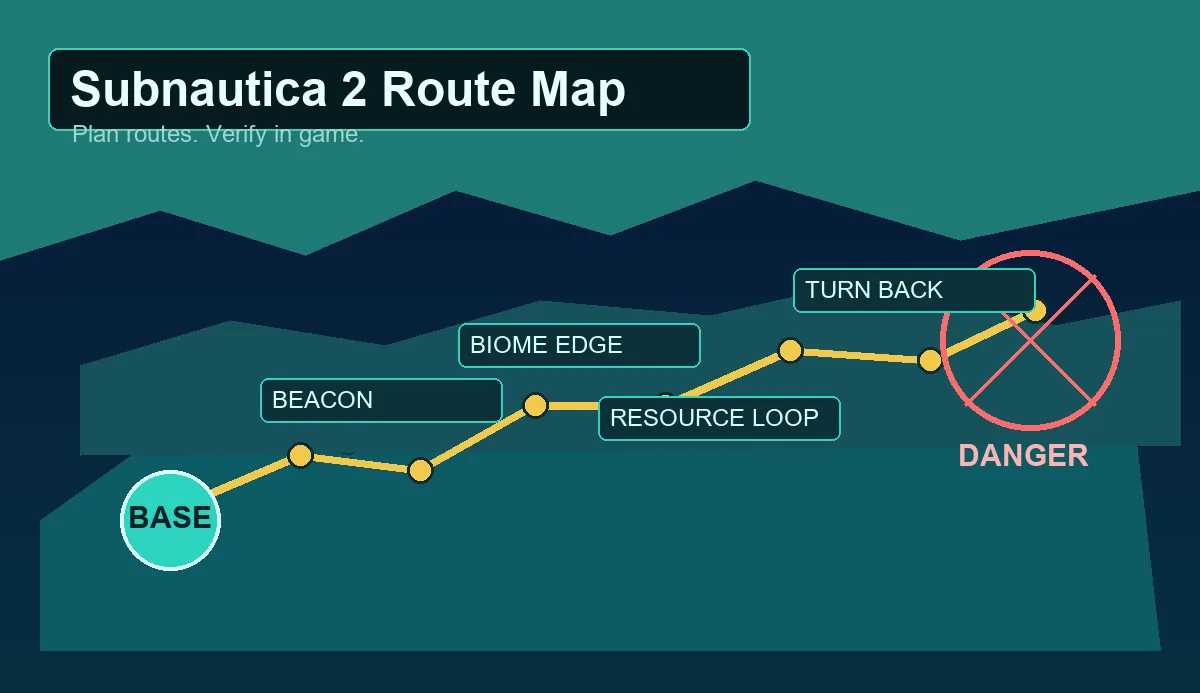
Um mapa pessoal não é uma captura de tela, mas um sistema de sobrevivência feito de rotas repetíveis, pontos de retorno conhecidos e nomes compartilhados. Comece com um pequeno circuito seguro ao redor da primeira base. Adicione uma rota de recursos, um alerta de criaturas, uma rota de exploração mais profunda e uma linha de retorno de emergência. Quando esses caminhos estiverem claros, um mapa interativo de terceiros será mais útil porque você poderá compará-lo com lugares que já conhece.
Comece de uma base nomeada
Toda rota precisa partir de um ponto que o grupo encontre sob pressão.
Marque pontos de retorno
Registre quando a profundidade, caverna ou som torna a rota arriscada.
Separe recurso e perigo
Combine recompensa com oxigênio, visibilidade e risco de criaturas.
Deixe spoilers opcionais
História e leviatãs só devem aparecer se o grupo aceitar.
Biomes
Como ler limites de biomas sem um mapa perfeito
A exploração no estilo Subnautica é construída nas transições. Muitas vezes você aprende mais na borda de um bioma do que correndo para o centro.
Mudanças de cor e visibilidade
Uma mudança na cor da água, nas partículas, no relevo ou no som costuma alertar antes de um nome no mapa. Diminua o ritmo antes que o rótulo mude.
Zonas que atraem pelos recursos
Materiais úteis costumam aparecer perto do risco. Se uma área parece generosa, confira oxigênio, direção da saída e sons de criaturas antes de coletar tudo.
Rotas verticais importam
Variações de profundidade podem tornar perigosa uma rota horizontal curta. Registre se é possível subir diretamente ou se as cavernas exigem um retorno mais longo.
Chamadas no co-op precisam de nomes
Um grupo não consegue reagir a “aqui” em um oceano alienígena. Use nomes simples como Borda Oeste de Algas, Queda Azul ou Túnel Sul da Base.
Checklist
Checklist de mapa e sinalizadores para novas explorações
Use esta checklist antes de considerar uma rota nova segura ou adicioná-la a um mapa compartilhado.
| Stage | Map action | Why it matters |
|---|---|---|
| Antes de sair | Defina o destino, o sinalizador de retorno, o limite de oxigênio e a tarefa de cada jogador. | Muitos erros de mapa começam antes do mergulho porque o grupo não tem uma regra de rota compartilhada. |
| At the biome edge | Pare, encare a saída e anote visibilidade, som, profundidade e movimento das criaturas. | A borda mostra se a rota serve para escanear, coletar ou recuar. |
| Inside the route | Adicione apenas um objetivo por vez: material, fragmento, caverna ou escaneamento de criatura. | Acumular objetivos faz o jogador perder a linha de retorno e ultrapassar a margem de oxigênio. |
| After returning | Renomeie sinalizadores vagos e apague marcadores enganosos antes da próxima exploração. | Um mapa lotado é quase tão perigoso quanto não ter mapa quando o grupo entra em pânico. |
O contexto oficial do produto e a direção das atualizações devem ser conferidos no site oficial de Subnautica.
Co-op Navigation
Compartilhar um mapa no co-op com 4 jogadores
O co-op de Subnautica 2 torna a disciplina do mapa ainda mais importante. Quatro jogadores podem descobrir mais rotas, mas também criar quatro sistemas de sinalizadores conflitantes. Escolha uma pessoa para nomear rotas, outra para registrar recursos, outra para marcar perigos e outra para cuidar da logística da base. Antes de descer mais, diga qual é o sinalizador de retorno e combine se marcadores de história ou leviatãs serão usados.
Mistakes
Erros de mapa que fazem jogadores se perderem
As piores rotas não surgem apenas da falta de dados, mas de confiar no tipo errado de informação na hora errada.
Seguir um mapa antigo depois de um patch
Atualizações do acesso antecipado podem mudar prioridades. Confira novamente os marcadores importantes de recursos e perigo depois de atualizações relevantes.
Colocar sinalizadores demais
Uma dúzia de marcadores vagos pode esconder a única rota importante. Use nomes curtos e apague marcadores que não ajudam mais.
Marcar recompensas, mas não saídas
Um marcador de material fica incompleto sem uma direção de fuga. Registre sempre como sair, não apenas por que entrar.
Dar spoilers ao grupo por padrão
Camadas de mapas interativos podem revelar criaturas e história. Mantenha as camadas cheias de spoilers desligadas até o grupo concordar.
Próximos guias
Conecte o mapa às decisões de sobrevivência
Conecte o mapa às decisões de sobrevivência.
Guia de construção de bases de Subnautica 2
Internal
Subnautica 2 creatures guide
Internal
Subnautica 2 co-op guide
Internal
Linha do tempo de atualizações de Subnautica 2
Interno
Subnautica 2 na Steam
Official
FAQ
FAQ do mapa de Subnautica 2
Existe um mapa interativo de Subnautica 2?
Mapas interativos e camadas da comunidade ajudam a filtrar biomas, recursos, fragmentos e perigos. Como o acesso antecipado muda, confirme os marcadores importantes na versão atual e use seus próprios sinalizadores.
Como usar um mapa interativo de Subnautica 2?
Comece com um objetivo, como uma rota de recursos ou uma borda de bioma. Ative apenas as camadas necessárias, compare oxigênio e visibilidade e marque o retorno dentro do jogo.
O que marcar primeiro no mapa?
Marque a base inicial, a rota de retorno, um ciclo seguro de recursos, a borda perigosa do bioma, a entrada da caverna e o ponto de volta.
Jogadores de co-op devem compartilhar todos os marcadores?
Não. Compartilhe primeiro os marcadores de sobrevivência e deixe história ou leviatãs opcionais para não retirar a descoberta.
O mapa de Subnautica 2 pode mudar durante o acesso antecipado?
Pode. Biomas, recursos, risco de criaturas e caminhos de progressão podem mudar; registre a data do patch e confira as atualizações oficiais.
Qual é o tamanho do mapa de Subnautica 2?
Para sobreviver, segurança da rota, profundidade, oxigênio e deslocamento vertical importam mais que o tamanho bruto. Comparações são apenas contexto.
Qual a diferença entre mapa interativo e mapa de recursos?
O mapa interativo ajuda com biomas e locais possíveis; o mapa de recursos serve para ciclos curtos de coleta. Use os dois como referência e confirme o retorno com sinalizadores.
Um mapa interativo substitui a navegação no jogo?
Não. Use-o para preparar a exploração e priorize sinalizadores, visibilidade, oxigênio, profundidade e uma rota segura de retorno.