Subnautica 2 Interactive Map Guide: Biomes, Beacons & Routes
A Subnautica 2 interactive map is useful for filtering candidate locations, but it is not a replacement for in-game beacons. Compare biomes, resources, danger edges, oxygen limits, and return routes before a long dive.
- IntentMap, biomes, navigation
- Best useBeacon routes and safe planning
- Update riskEarly Access world changes
Quick Answer
How should you use a Subnautica 2 interactive map?
Use a Subnautica 2 interactive map as a planning layer: filter biomes, resources, fragments, and danger notes, then confirm the route with your own beacons. Early Access can change borders, resource density, creature risk, and progression, so verify important markers in the current build.
Keep spoiler-heavy layers optional, test one route at a time, and write the patch date beside any map note you share with friends.
Map Status
What a Subnautica 2 Map Can Tell You During Early Access
Search demand is strong for a complete map, but map content should stay honest about what can change while the game is still evolving.
| Map topic | Current reading | Player action |
|---|---|---|
| Full world map | Useful as a direction target, but not safe to treat as final during Early Access. | Use it to choose a general route, then confirm the path in game before carrying rare materials. |
| Biome borders | Biome names, boundaries, and danger levels may shift as updates add or rebalance areas. | Mark the edge with a beacon and record what oxygen, depth, and creature pressure felt like. |
| Resource markers | Resource density is one of the most patch-sensitive map claims. | Keep a short local note instead of assuming a copied marker stays accurate forever. |
| Interactive maps | Interactive maps are helpful for filtering points of interest, but they can also spoil discovery. | Turn on only the marker layer you need: base route, fragment, material, or danger zone. |
Interactive Map
When to use an interactive Subnautica 2 map
Use a Subnautica 2 interactive map to filter biomes, resources, fragments, and danger notes; then confirm the route with in-game beacons.
| Use case | Best map layer | What to avoid |
|---|---|---|
| Finding a safe first route | Base, beacon, shallow resource, and return-path layers. | Turning on every story or leviathan marker before your group agrees. |
| Checking biome borders | Biome edge, depth, visibility, and creature-risk notes. | Assuming an Early Access border is final after a major patch. |
| Comparing map size | Practical travel time, oxygen margin, and vertical depth routes. | Comparisons to unrelated open-world games unless they explain navigation risk. |
| Co-op planning | Shared beacon names, route owner, resource loop, and danger callouts. | Four players creating four unrelated marker systems. |
Route Plan
Build Your Own Map Before You Trust Somebody Else's
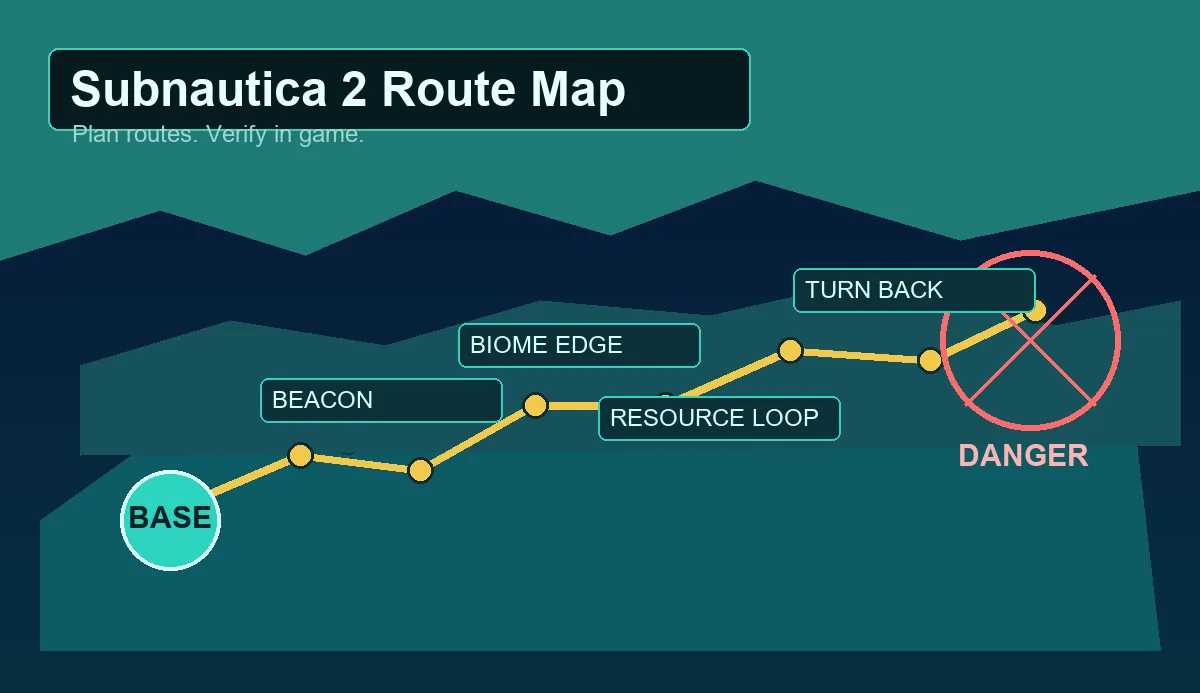
A personal map is not a screenshot. It is a survival system made from repeatable routes, known turn-back points, and shared names. Start with a small safe loop around your first base. Add one resource route, one creature warning, one deeper scouting route, and one emergency return line. When those routes are clear, a third-party interactive map becomes more useful because you can compare it against places you already understand.
Start from a named base
Every route should begin from a place the group can find under stress. Name the starter base, main exit, and nearest oxygen-safe return point.
Mark turn-back points
A map is strongest when it tells you when to leave. Mark the depth, tunnel, or creature sound where the route stops being safe.
Separate resource and danger notes
Do not label a location only by reward. Pair every resource marker with oxygen cost, visibility, and creature risk so the note remains useful after a patch.
Keep spoilers optional
Map layers for story objects, leviathans, or late-game routes should be optional in co-op. Some players want safety; others want discovery.
Biomes
How to Read Biome Borders Without a Perfect Map
Subnautica-style exploration is built around transitions. You often learn more from the edge of a biome than from rushing into its center.
Color and visibility changes
A shift in water color, particles, terrain shape, or sound is often a stronger warning than a name label. Slow down before the map label changes.
Resource temptation zones
Useful materials often appear near risk. If a pocket looks generous, check oxygen, exit direction, and creature sound before collecting everything.
Vertical routes matter
Depth changes can make a short horizontal route dangerous. Record whether you can ascend directly or whether caves force a longer return.
Co-op callouts need names
A group cannot react to “over here” in an alien ocean. Use simple route names such as West Kelp Edge, Blue Drop, or Base South Tunnel.
Checklist
Map and Beacon Checklist for New Dives
Use this checklist before treating a new route as safe or adding it to a shared map.
| Stage | Map action | Why it matters |
|---|---|---|
| Before leaving base | Set the destination, return beacon, oxygen threshold, and job for each player. | Most map failures begin before the dive because the group has no shared route rule. |
| At the biome edge | Pause, face the exit, and note visibility, sound, depth, and creature movement. | The edge tells you whether the route is a scan route, a resource route, or a retreat marker. |
| Inside the route | Add only one new objective at a time: material, fragment, cave, or creature scan. | Stacking objectives is how players lose the return line and overstay oxygen margin. |
| After returning | Rename vague beacons and delete misleading markers before the next dive. | A cluttered map is almost as dangerous as no map when a co-op team panics. |
Official product context and update direction should be checked on the official Subnautica site.
Co-op Navigation
How to Share a Map in 4-Player Co-op
Subnautica 2 co-op makes map discipline more important, not less. Four players can discover more routes, but they can also create four conflicting beacon systems. Assign one player to route names, one to resource notes, one to danger edges, and one to base logistics. Before a deeper dive, say the return beacon aloud and agree whether story or leviathan markers are allowed.
Mistakes
Map Mistakes That Get Players Lost
Most bad routes are not caused by missing data. They come from trusting the wrong kind of data at the wrong time.
Following an old map after a patch
Early Access updates can move priorities. Recheck high-value resource and danger markers after meaningful updates.
Adding too many beacons
A dozen vague markers can hide the one route that matters. Use short names and delete markers that no longer guide action.
Mapping rewards but not exits
A material marker is incomplete without an escape direction. Always record how to leave, not only why you entered.
Spoiling the group by default
Interactive map layers can reveal creatures and story beats. Keep spoiler-heavy layers off unless the group agrees.
Next Guides
Connect the Map to Survival Decisions
A useful map should lead into base planning, creature safety, co-op roles, and hardware checks rather than becoming a disconnected marker list.
Subnautica 2 base building guide
Internal
Subnautica 2 creatures and leviathans guide
Internal
Subnautica 2 multiplayer co-op guide
Internal
Subnautica 2 update timeline
Internal
Subnautica 2 on Steam
Official
FAQ
Subnautica 2 Map FAQ
Is there a Subnautica 2 interactive map?
Interactive maps and community layers can help filter biomes, resources, fragments, and dangers. Because Early Access changes, verify important markers in the current build and keep your own in-game beacons.
How do I use a Subnautica 2 interactive map?
Start with one goal, such as a resource loop or biome edge. Turn on only the layers you need, compare the route with oxygen and visibility limits, and mark the return path in game.
What should I mark first on the map?
Mark the starter base, main return route, safe resource loop, dangerous biome edge, cave entrance, and the point where oxygen becomes uncomfortable.
Should co-op players share every map marker?
No. Share core survival markers first and keep spoiler-heavy story or leviathan markers optional so the map reduces confusion without removing discovery.
Will the Subnautica 2 map change during Early Access?
It can. Biome borders, resources, creature risk, and progression paths may change, so add the patch date to shared notes and recheck official updates.
How big is the Subnautica 2 map?
For survival planning, route safety, depth, oxygen margin, and vertical travel matter more than raw map size. Treat size comparisons as context, not as a route plan.
What is the difference between an interactive map and a resource map?
An interactive map helps with biome context and candidate locations, while a resource map is better for short material-gathering loops. Use both as references and confirm the return route with beacons.
Can an interactive map replace in-game navigation?
No. Use it to prepare, then rely on beacons, visibility, oxygen, depth, and a safe return route during the actual dive.