Interaktive Subnautica 2 Karte: Biome, Beacons und Routen
Eine interaktive Subnautica-2-Karte hilft beim Filtern möglicher Orte, ersetzt aber keine Beacons im Spiel. Vergleiche Biome, Ressourcen, Gefahren, Sauerstoff und Rückwege vor einem langen Tauchgang.
- IntentKarte, Biome, Navigation
- Best useBeacon-Routen und sichere Planung
- Update riskÄnderungen der Early-Access-Welt
Schnellantwort
Wie nutzt man eine interaktive Subnautica 2 Karte?
Nutze eine interaktive Subnautica-2-Karte als Planungsebene: Filtere Biome, Ressourcen, Fragmente und Gefahren und prüfe die Route anschließend mit eigenen Beacons. Early Access kann Grenzen, Ressourcen, Kreaturenrisiken und Fortschritt ändern; wichtige Marker müssen im aktuellen Build geprüft werden.
Lass spoilerlastige Ebenen optional, teste eine Route nach der anderen und notiere das Patchdatum neben geteilten Kartennotizen.
Kartenstatus
Was eine Subnautica 2 Map im Early Access leisten kann
Die Nachfrage nach einer vollständigen Karte ist groß, doch Biome, Ressourcen und Gefahren bleiben veränderbar.
| Kartenthema | Aktuelle Einschätzung | Aktion |
|---|---|---|
| Weltkarte | Hilft bei der Richtung, ist aber kein endgültiger Atlas. | Route grob planen und im Spiel prüfen. |
| Biome | Grenzen und Gefahren können sich ändern. | Beacon am Rand setzen und Tiefe, Sicht, Kreaturen notieren. |
| Ressourcen | Marker sind patchanfällig. | Eigene kurze Notiz mit Datum führen. |
| Interaktive Karten | Nützlich zum Filtern, aber spoilerreich. | Nur benötigte Ebenen aktivieren. |
Interaktive Karte
Wann eine interaktive Subnautica 2 Karte hilft
Nutze eine interaktive Subnautica-2-Karte, um Biome, Ressourcen, Fragmente und Gefahren zu filtern, und prüfe die Route anschließend mit Signalbojen im Spiel.
| Zweck | Beste Ebene | Vermeiden |
|---|---|---|
| Sichere erste Route | Basis, Beacon, flache Ressourcen und Rückweg. | Story- oder Leviathan-Marker ohne Gruppenkonsens aktivieren. |
| Biomgrenzen | Grenze, Tiefe, Sicht und Kreaturenrisiko. | Early-Access-Grenzen nach einem Patch als final sehen. |
| Kartengröße | Reisezeit, Sauerstoffreserve und vertikale Routen. | Unpassende Open-World-Vergleiche ohne Navigationsnutzen. |
| Koop-Planung | Beacon-Namen, Routenbesitzer, Ressourcen und Gefahr. | Vier verschiedene Markersysteme. |
Route Plan
Erstelle deine eigene Karte, bevor du fremden Karten vertraust
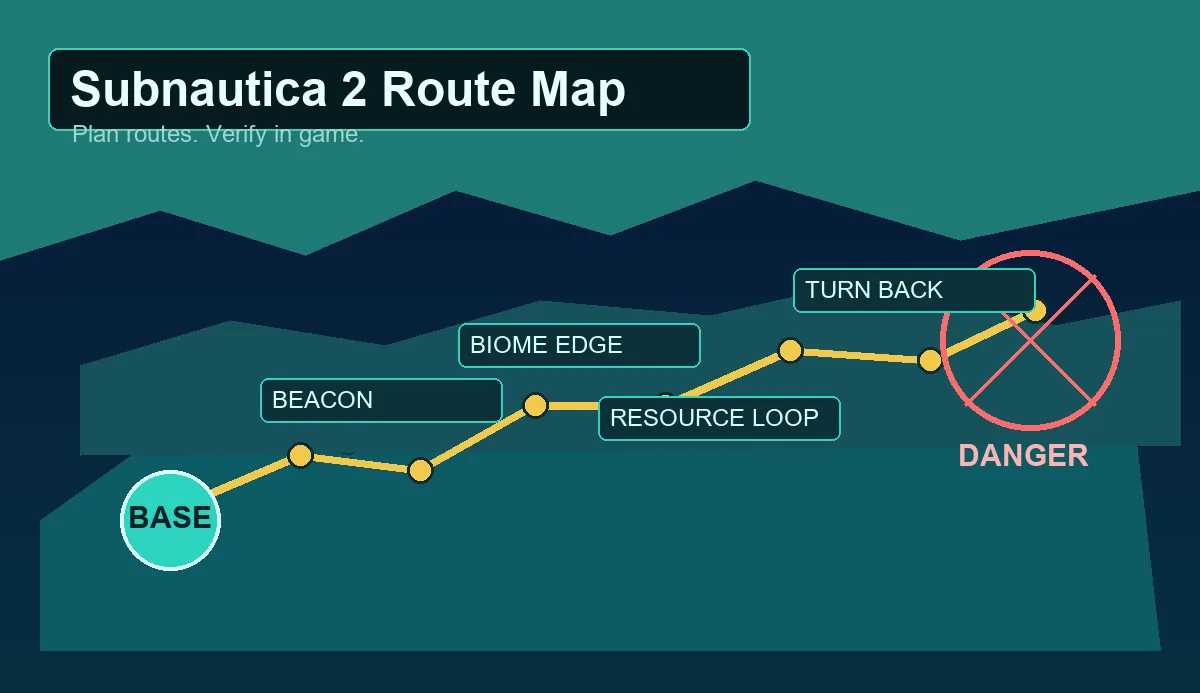
Eine eigene Karte ist kein Screenshot, sondern ein Überlebenssystem aus wiederholbaren Routen, bekannten Umkehrpunkten und gemeinsamen Namen. Beginne mit einer kleinen sicheren Schleife um die erste Basis. Ergänze eine Ressourcenroute, einen Kreaturenhinweis, eine tiefere Erkundungsroute und eine Notfall-Rückkehr. Wenn diese Wege klar sind, wird eine interaktive Karte von Drittanbietern nützlicher, weil du sie mit bereits bekannten Orten vergleichen kannst.
Von einer benannten Basis starten
Jede Route braucht einen Startpunkt, den die Gruppe unter Druck findet.
Umkehrpunkte markieren
Notiere, ab welcher Tiefe, Höhle oder Geräuschlage die Route unsicher wird.
Ressourcen und Gefahr trennen
Schreibe Sauerstoffkosten, Sicht und Kreaturenrisiko neben die Belohnung.
Spoiler optional halten
Story- und Leviathan-Ebenen nur mit Zustimmung der Gruppe nutzen.
Biomes
Biomgrenzen ohne perfekte Karte lesen
Die Erkundung im Stil von Subnautica lebt von Übergängen. Am Rand eines Bioms lernt man oft mehr, als wenn man direkt in die Mitte stürmt.
Farb- und Sichtweitenwechsel
Eine Veränderung von Wasserfarbe, Partikeln, Geländeform oder Geräuschen warnt oft stärker als ein Kartenname. Werde langsamer, bevor sich die Kartenbezeichnung ändert.
Zonen mit verlockenden Ressourcen
Nützliche Materialien liegen oft nahe am Risiko. Wenn eine Stelle ergiebig wirkt, prüfe Sauerstoff, Fluchtrichtung und Kreaturengeräusche, bevor du alles einsammelst.
Vertikale Routen sind wichtig
Tiefenwechsel können eine kurze horizontale Route gefährlich machen. Notiere, ob du direkt aufsteigen kannst oder ob Höhlen einen längeren Rückweg erzwingen.
Koop-Rufnamen brauchen klare Begriffe
Eine Gruppe kann auf „hier drüben“ in einem fremden Ozean nicht gut reagieren. Verwende einfache Routennamen wie Westlicher Tangrand, Blauer Abstieg oder Südtunnel der Basis.
Checklist
Karten- und Beacon-Checkliste für neue Tauchgänge
Nutze diese Checkliste, bevor du eine neue Route als sicher einstufst oder sie einer gemeinsamen Karte hinzufügst.
| Stage | Map action | Why it matters |
|---|---|---|
| Vor dem Aufbruch | Lege Ziel, Rückkehr-Beacon, Sauerstoffgrenze und Aufgabe für jeden Spieler fest. | Die meisten Kartenfehler beginnen vor dem Tauchgang, weil die Gruppe keine gemeinsame Routenregel hat. |
| At the biome edge | Halte an, richte dich zum Ausgang und notiere Sichtweite, Geräusche, Tiefe und Bewegungen von Kreaturen. | Der Rand zeigt, ob die Route zum Scannen, Sammeln oder als Rückzugspunkt dient. |
| Inside the route | Füge immer nur ein neues Ziel hinzu: Material, Fragment, Höhle oder Kreaturenscan. | Zu viele Ziele auf einmal lassen Spieler die Rückkehrlinie verlieren und zu lange unter Wasser bleiben. |
| After returning | Benenne unklare Beacons um und lösche irreführende Marker vor dem nächsten Tauchgang. | Eine überladene Karte ist für ein panisches Koop-Team fast so gefährlich wie gar keine Karte. |
Offizielle Produktinformationen und Update-Hinweise findest du auf der offiziellen Subnautica-Website.
Navigation im Koop
Eine Karte im Koop mit 4 Spielern teilen
Im Koop von Subnautica 2 wird Kartendisziplin noch wichtiger. Vier Spieler entdecken mehr Routen, können aber auch vier widersprüchliche Beacon-Systeme anlegen. Bestimme eine Person für Routennamen, eine für Ressourcen-Notizen, eine für Gefahrenränder und eine für die Basislogistik. Vor einem tieferen Tauchgang sollte jeder das Rückkehr-Beacon kennen und klar sein, ob Story- oder Leviathan-Marker erlaubt sind.
Mistakes
Kartenfehler, die Spieler verirren lassen
Die meisten schlechten Routen entstehen nicht durch fehlende Daten, sondern durch Vertrauen in die falschen Daten zur falschen Zeit.
Nach einem Patch einer alten Karte folgen
Early-Access-Updates können Prioritäten verschieben. Prüfe wichtige Ressourcen- und Gefahrenmarker nach größeren Updates erneut.
Zu viele Beacons setzen
Ein Dutzend vager Marker kann die eine wichtige Route verdecken. Verwende kurze Namen und lösche Marker, die nicht mehr weiterhelfen.
Belohnungen, aber keine Ausgänge markieren
Ein Materialmarker ist ohne Fluchtrichtung unvollständig. Notiere immer, wie du wieder hinauskommst, nicht nur, warum du hineingehst.
Die Gruppe standardmäßig spoilern
Interaktive Kartenebenen können Kreaturen und Storymomente verraten. Lass spoilerreiche Ebenen aus, solange die Gruppe nicht zustimmt.
Nächste Guides
Karte mit Überlebensentscheidungen verbinden
Karte mit Überlebensentscheidungen verbinden.
Subnautica 2: Guide zum Basenbau
Intern
Subnautica 2 creatures guide
Intern
Subnautica 2 co-op guide
Intern
Subnautica 2 Update-Zeitplan
Intern
Subnautica 2 auf Steam
Offiziell
FAQ
FAQ zur Subnautica 2 Map
Gibt es eine interaktive Subnautica 2 Karte?
Interaktive Karten und Community-Ebenen helfen bei Biomen, Ressourcen, Fragmenten und Gefahren. Da sich Early Access ändert, prüfe wichtige Marker im aktuellen Build und setze eigene Beacons.
Wie nutze ich eine interaktive Subnautica 2 Karte?
Beginne mit einem Ziel, etwa einer Ressourcenrunde oder einer Biome-Grenze. Aktiviere nur nötige Ebenen, vergleiche Sauerstoff und Sichtweite und markiere den Rückweg im Spiel.
Was markiere ich zuerst auf der Karte?
Markiere Startbasis, Rückweg, sichere Ressourcenrunde, gefährliche Biome-Grenze, Höhleneingang und Umkehrpunkt.
Sollten Koop-Spieler alle Marker teilen?
Nein. Teile zuerst Überlebensmarker und halte Story- oder Leviathan-Marker optional, damit die Karte Orientierung gibt ohne Entdeckung zu entfernen.
Ändert sich die Subnautica-2-Karte während Early Access?
Das ist möglich. Biome, Ressourcen, Kreaturenrisiken und Fortschrittswege können sich ändern; notiere das Patchdatum und prüfe offizielle Updates.
Wie groß ist die Subnautica 2 Karte?
Für Survival zählen Routensicherheit, Tiefe, Sauerstoffreserve und vertikale Wege mehr als die reine Größe. Vergleiche sind nur Kontext.
Was ist der Unterschied zwischen interaktiver Karte und Ressourcenkarte?
Die interaktive Karte hilft bei Biomen und möglichen Zielen, die Ressourcenkarte bei kurzen Sammelrouten. Nutze beide als Referenz und sichere den Rückweg mit Beacons.
Ersetzt eine interaktive Karte die Navigation im Spiel?
Nein. Nutze sie zur Vorbereitung und verlasse dich beim Tauchgang auf Beacons, Sichtweite, Sauerstoff, Tiefe und einen sicheren Rückweg.